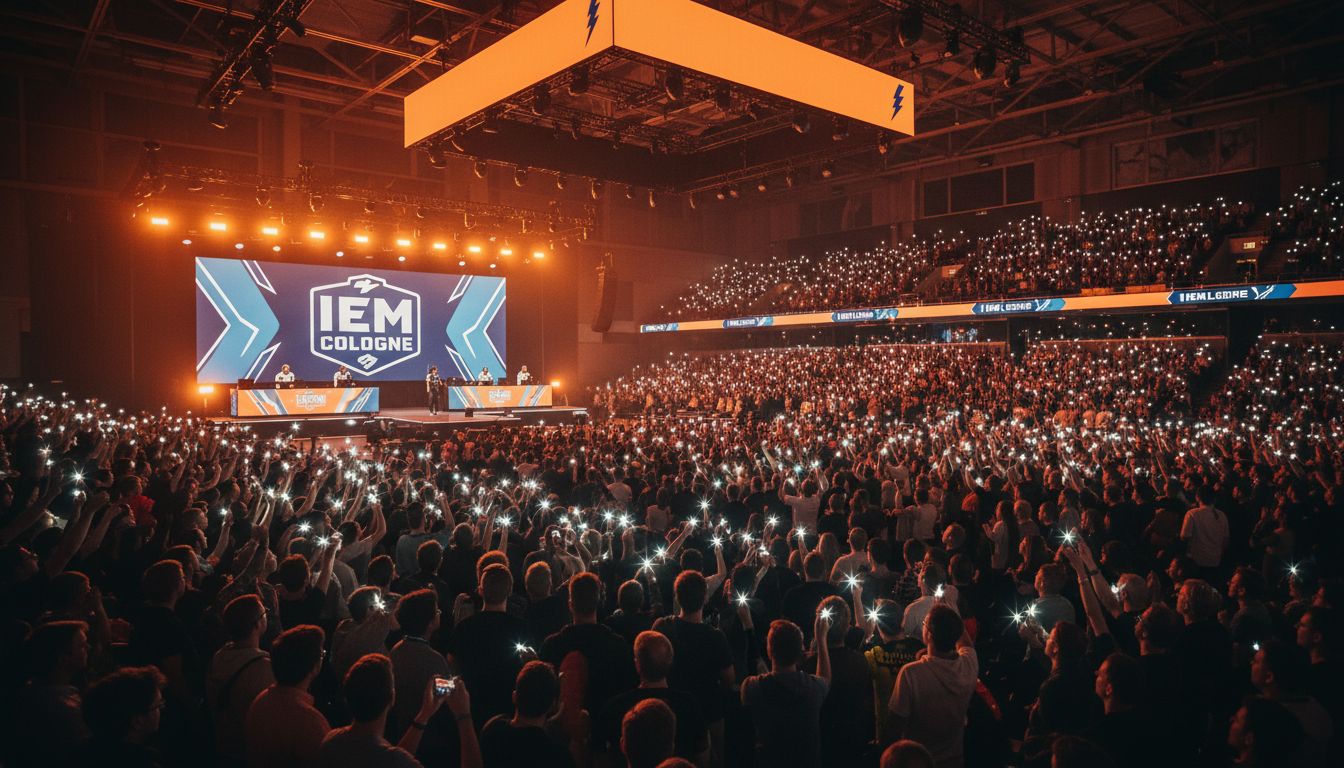
Valve moved quickly to address one of the most complained-about viewing issues in Counter-Strike 2 broadcasts: overly intense spectator flashbang effects. With IEM Cologne 2026 around the corner, the company shipped a hotfix on 29 May 2026 that restores clearer observer visuals and reduces the “full-screen whiteout” problem that had been frustrating viewers.
For fans, casters, and tournament crews, this is more than a cosmetic tweak. Spectator readability directly affects how well people can follow mid-round trades, utility combos, and momentum swings,especially during high-stakes playoff Counter-Strike where every kill feed update and timing cue matters.
What changed: the spectator flashbang problem in plain terms
In the days leading up to the hotfix, a CS2 change had increased the intensity of the flash effect for observers. Spectator views were seeing a fully opaque, full-screen flash that often felt stronger than what players experienced, making key moments harder to follow on stream.
HLTV summarized one of the biggest issues: the kill feed could be obscured by the flash effect. When viewers can’t see who died, who traded, or whether a multi-kill happened in quick succession, the broadcast loses crucial context in the exact moments that define rounds.
The backlash was immediate and widespread. Community discussion,especially on Reddit,was strongly negative, with many fans calling for a revert or a quick fix before IEM Cologne, where production quality and readability expectations are at their highest.
The 29 May 2026 hotfix: clarity restored a of IEM Cologne
On 29 May 2026, Valve released a hotfix that addressed the recently increased spectator flash effect. The practical result: observers no longer have their entire view swallowed by an opaque white screen during flashbangs in the same way, bringing broadcasts back to a more watchable baseline.
Dust2.us noted the timing mattered: the fix landed five days before the IEM Cologne 2026 kickoff. That window is critical for tournament operations, because production teams need time to validate changes across GOTV/observer setups, overlays, and replay workflows.
From a viewer perspective, the change signals that Valve is treating broadcast issues as first-class problems, not just “nice-to-have” polish. For a game that lives and dies by esports visibility, getting spectator behavior right is part of keeping the competitive scene healthy.
New organizer control: r_spectator_flashbang_opacity
The hotfix added a new console variable: r_spectator_flashbang_opacity. Instead of a fixed flash intensity for remote spectators, tournament organizers and production teams can now adjust how opaque the flash appears in observer feeds.
This is a meaningful shift because not all broadcasts are the same. Different overlay designs, color palettes, and HUD layouts can interact with bright flash effects in different ways, and what looks acceptable in one environment can be disruptive in another.
For the community, the convar is also a reassuring sign of flexibility. It suggests Valve recognizes that “one size fits all” observer settings can break down at the top level,and that giving organizers tools is often the fastest path to consistent viewing quality.
HUD readability: flash effect now renders underneath the HUD
One of the most important technical details in the hotfix is that the spectator flash now renders underneath the HUD. In other words, the flash effect is pushed below key broadcast elements rather than covering everything on top.
That directly addresses the core complaint highlighted by HLTV: the kill feed being obstructed. With the HUD staying readable, viewers can still track eliminations, trades, and the rhythm of the round even when a flashbang pops during an execute or retake.
This also helps casters and analysts, who frequently reference the kill feed and other HUD cues to explain how a round swung. When those elements remain visible, commentary stays accurate and fast,without awkward guessing during chaotic sequences.
CS:GO-like transparency returns,and why it matters
Dust2.us described the restored spectator flash opacity as being closer to CS:GO’s earlier behavior, where the flash was impactful but slightly transparent for observers. That comparison is important because CS:GO’s broadcast “language” is what many fans and production crews have internalized over years of top-tier events.
When CS2 shifts that language too abruptly,especially in a way that hides information,viewers feel it immediately. Utility usage is central to Counter-Strike storytelling, but the broadcast still needs to communicate outcomes: who got blinded, who died, and what space was gained.
Restoring a more familiar transparency doesn’t mean avoiding innovation. It means preserving the spectator’s ability to understand the round while still showcasing the visual punch of utility,an especially delicate balance in a game where flashes are designed to deny information.
Why this fits Valve’s bigger CS2 philosophy on visual clarity
On CS2’s feature pages, Valve has emphasized that visual effects were redesigned with an emphasis on clarity. That goal is often discussed in the context of players,readable smokes, consistent lighting, and cleaner feedback,but it applies just as much to spectators.
The official CS2 update history also shows an ongoing pattern: Valve regularly revises graphics and spectator-related behavior, including prior adjustments to flashbangs and animations. In that sense, this hotfix isn’t an anomaly,it’s part of an iterative approach to how CS2 “reads” in motion.
For the community, the takeaway is that observer experience is still being tuned in real time. As CS2 evolves, some changes will land imperfectly, but quick corrections,especially when competitive events are imminent,help reinforce trust in that iteration process.
Impact on IEM Cologne 2026 broadcast prep and testing
Beyond the patch notes, the operational side matters. HLTV reported that ESL FACEIT Group’s Marc Winther said the organizer would test the revised spectator flash behavior in time for the IEM Cologne Major, reflecting how seriously production teams take visibility and consistency.
Testing isn’t just “does it look better?” It includes verifying that observer PCs, delay setups, replay systems, and overlays all behave predictably when flashes occur repeatedly during fast executes,especially in maps and positions where the screen is already bright.
If you’re a fan watching from home, this behind-the-scenes work is what prevents the broadcast from feeling chaotic or confusing. The hotfix arriving days before the event gives organizers a workable runway to fine-tune settings,potentially using the new opacity control to match their production style.
Valve’s spectator flash hotfix is a clear example of prioritizing broadcast readability when it matters most. By restoring clearer flash behavior, keeping the HUD visible, and introducing r_spectator_flashbang_opacity, CS2 broadcasts are better positioned to deliver the information viewers need during the most utility-heavy moments.
With IEM Cologne 2026 next on the calendar, the community will be watching closely,not just the matches, but how the observer experience holds up under playoff pressure. If the fix performs as intended, it’s a win for everyone: players get their competitive utility, and fans get a broadcast that stays readable when the action peaks.