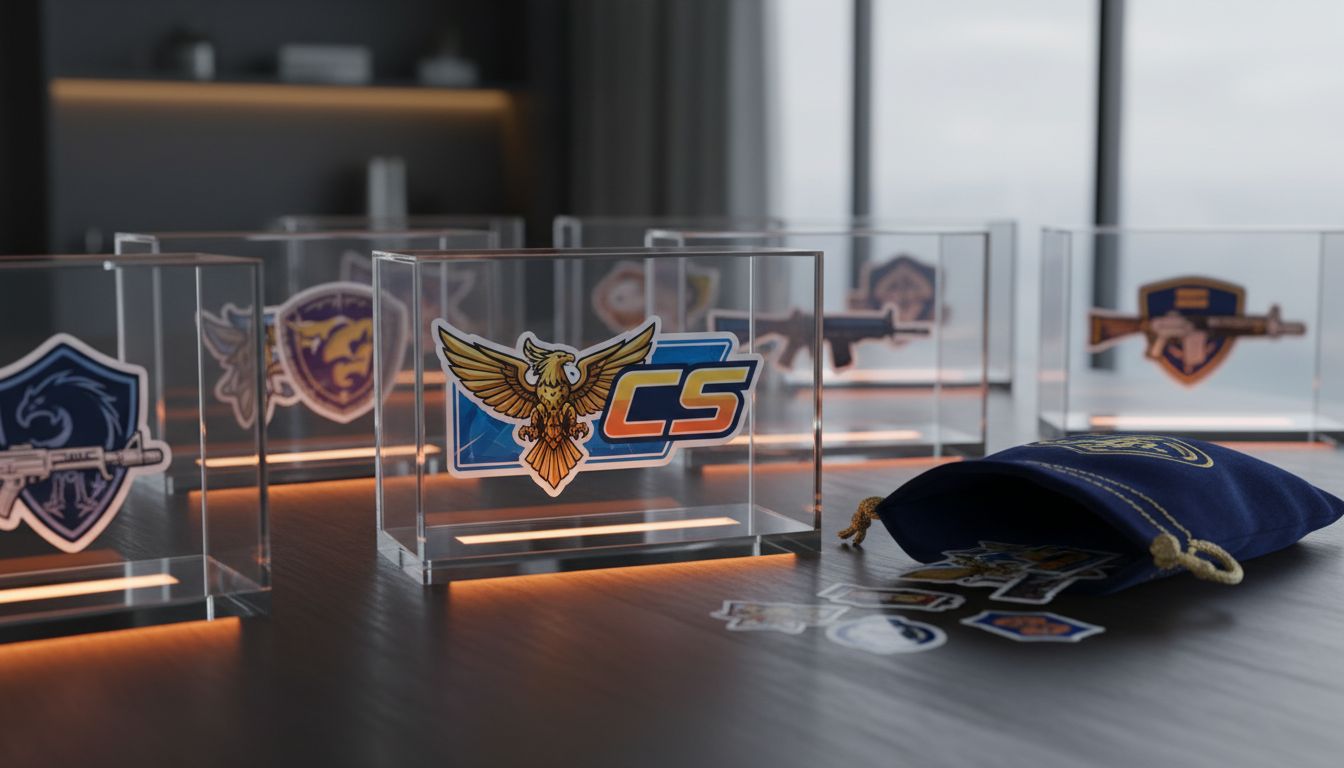
Counter-Strike has always had a strong relationship with cosmetics, but the new major sticker shop in CS2 has pushed that relationship into very different territory. What was once a familiar part of esports memorabilia now looks increasingly like a luxury collectibles market, where price, scarcity, status, and complete-set ownership matter as much as team support or visual style.
The numbers alone explain why the conversation has changed. One recent report estimated that a full set of 100 Cologne 2026 Major stickers would cost $19,447.37, while the most expensive single sticker reached $1,522. Those are not ordinary cosmetic prices. They place major stickers in the same cultural discussion as other high-end collectible categories, where buyers are paying for prestige, rarity, and future upside rather than practical use.
A shop that feels more like a boutique
The biggest structural change is how Valve now sells these items. With the token-and-redeem system, players are no longer dealing with the same chance-based opening model that defined earlier sticker acquisition. Instead, the process is direct, intentional, and much closer to selecting a premium item from a storefront.
That shift matters because buying psychology changes when randomness disappears. In a random-drop economy, buyers often frame the purchase as entertainment or gambling-adjacent excitement. In a direct-purchase environment, the sticker becomes a chosen asset, and the transaction starts to resemble premium retail behavior, where shoppers deliberately target specific pieces for personal collections or resale plans.
For the CS2 community, this turns the major sticker shop into something more than a menu of cosmetics. It becomes a curated marketplace where each sticker has visible hierarchy, perceived prestige, and a clearer premium attached to it. That alone helps move stickers out of the usual microtransaction category and into the language of collecting.
Why prices now look like a luxury market
The Cologne 2026 example is the clearest sign that this is no longer a normal in-game purchase story. A $19,447.37 price for a full 100-sticker set is the kind of figure that forces players, traders, and spectators to rethink what these items represent. Even the most expensive single sticker at $1,522 suggests a market where cosmetic value is no longer anchored to ordinary player expectations.
These prices are not driven by gameplay utility. A sticker does not improve aim, movement, or competitive results. Its value comes from limited supply, tournament association, design appeal, and the social meaning attached to owning it. That is the same foundation seen in luxury goods, where price is often justified by scarcity, story, and desirability rather than function alone.
In practical terms, the new major sticker shop has made status visible. Expensive stickers are now signals of access, taste, timing, and capital. Within a community-driven game economy, that transforms them into objects that behave less like cosmetics and more like aspirational assets.
The power of rarity, hype, and complete sets
One of the strongest economic signals in this market is the premium placed on complete sets. Collectors are not only chasing one favorite logo or player signature. They are often trying to assemble a full status inventory, and that behavior mirrors luxury collecting in other categories, where complete runs, matching sets, and archive-quality groupings command attention.
That is why the reported 100-sticker Cologne 2026 total matters beyond its line value. The figure represents a collector mindset, not just a spending total. The buyer is purchasing coherence, exclusivity, and the prestige of completion. In luxury markets, that full-set logic can create a stronger premium than the sum of individual items, because the collection itself becomes the trophy.
Attention economy dynamics reinforce that pattern. The more a sticker is discussed, showcased, tracked, and compared, the more its scarcity gains cultural weight. In CS2, rarity is not just a supply metric. It is also a community narrative, shaped by tournament relevance, social visibility, and the belief that certain stickers stand above the rest.
Volatility keeps the market exciting and risky
Luxury-style pricing does not mean stability. In fact, one of the biggest complaints around the new sticker shop is how sharply prices can swing. Players have pointed out that values can move quickly, turning a purchase that looked smart in one moment into a costly decision shortly after.
Valve’s 24-hour token refund policy offers some flexibility, but it may not fully protect buyers in a fast-moving market. If prices shift significantly within or beyond that window, collectors and traders can still be exposed to sudden losses or missed opportunities. That creates the same tension found in other speculative collectible spaces, where access and timing matter almost as much as the item itself.
For the community, this is a reminder that the major sticker shop behaves more like a collectible economy than a standard game shop. Buyers are watching rarity, price history, momentum, and market windows in ways that resemble sneaker reselling, watch flipping, or art speculation. The sticker is only part of the story; the market around it is the real engine.
CS2 stickers fit a larger luxury-collectibles trend
The rise of high-end stickers in CS2 is not happening in isolation. Across luxury and auction reporting, collectibles have become an increasingly important category for buyers who want scarcity, cultural identity, and possible resale gains. In the first half of 2025, luxury collectibles accounted for 20.2% of total auction sales by value, even while the broader auction market fell 26%.
That contrast is important. It shows that collectible niches can stay strong even when wider markets cool. Demand concentrates around items that feel culturally meaningful, hard to obtain, and easy to signal. CS2 stickers fit that model surprisingly well, especially when tied to a Major event and treated as finite memorabilia with social recognition inside the game community.
The comparison to handbags, watches, jewelry, and other alternative luxury assets is not as strange as it first sounds. In all of these categories, buyers are motivated by more than function. They are buying heritage, symbolism, exclusivity, and a position within a wider cultural conversation. Major stickers now operate under much of that same logic.
Younger collectors are changing what luxury looks like
Another reason the sticker market makes sense is demographic. Recent luxury reporting linked to Art Basel and UBS shows that Gen Z and millennials are reshaping spending toward collectibles, luxury accessories, and culture-driven assets. Experts increasingly describe younger shoppers as people who prefer collecting over more traditional forms of consumption.
One report summary goes even further, saying Gen Z accounts for 56% of all collectibles spending. That matters for Counter-Strike because the game’s audience overlaps heavily with digital-native buyers who are comfortable assigning value to online items, community status, and resale potential. For this group, a rare tournament sticker does not need physical form to feel premium.
This generational shift also helps explain why small items can become serious status symbols. The broader market has already embraced micro-luxury, where relatively tiny products like bag charms or collectible accessories carry outsized prestige. In CS2, a sticker fills a similar role: small in size, but powerful as a marker of identity, taste, and market knowledge.
Online buying makes premium digital collecting feel normal
The infrastructure behind luxury collecting has also changed, and that supports what we are seeing in CS2. Christie’s reported that 85% of bids were placed online, while 41% of all new bidders entered through Luxury sales. That tells us digital-first participation is no longer a niche behavior in premium markets. It is becoming the standard route into collecting.
For game communities, this feels especially familiar. Counter-Strike players already operate in online marketplaces, track item values in real time, and discuss pricing across community hubs, trading spaces, and social channels. The leap from skin market habits to sticker luxury is therefore much smaller than it would be in a traditional retail environment.
As a result, the new major sticker shop benefits from a broader cultural normalization. People are increasingly comfortable treating online purchases as collectible assets, especially when those purchases are scarce, visible, and tied to fandom. That makes it easier for expensive stickers to be accepted not as an oddity, but as part of a larger premium collecting culture.
What this means for players, traders, and the CS2 community
For everyday players, the new major sticker shop creates a more complex landscape. On one hand, direct selection is more transparent than chance-based opening, and it gives buyers more control over what they are acquiring. On the other hand, that clarity has not made the market simpler. It has made value more visible, more stratified, and in some cases more intimidating.
For traders and market watchers, the message is even clearer: stickers should now be analyzed as collectible assets. Their pricing reflects scarcity, event significance, attention cycles, and set-building behavior, not simple cosmetic demand. Anyone tracking this category needs to think in terms of collector psychology as much as item design.
For the broader community, this shift opens a bigger conversation about where Counter-Strike‘s economy is ing. If major stickers can move into luxury territory, other categories may eventually follow similar patterns. The game is not just hosting cosmetics anymore. It is hosting a digital culture where fandom, status, and market behavior increasingly overlap.
In the end, the new major sticker shop turned collectible stickers into a luxury market by changing both the mechanics of purchase and the meaning of ownership. Direct selection gave these items the feel of premium retail, while rarity, complete-set chasing, and social prestige pushed prices far beyond what most players expect from ordinary cosmetics.
For Counter-Strike fans, this is more than a line about expensive stickers. It is a sign that CS2’s item economy is evolving alongside wider trends in luxury resale, online collecting, and Gen Z-driven status markets. Whether you see that as exciting, risky, or both, one thing is clear: the major sticker shop is no longer just a shop. It is part of a full collectible economy.