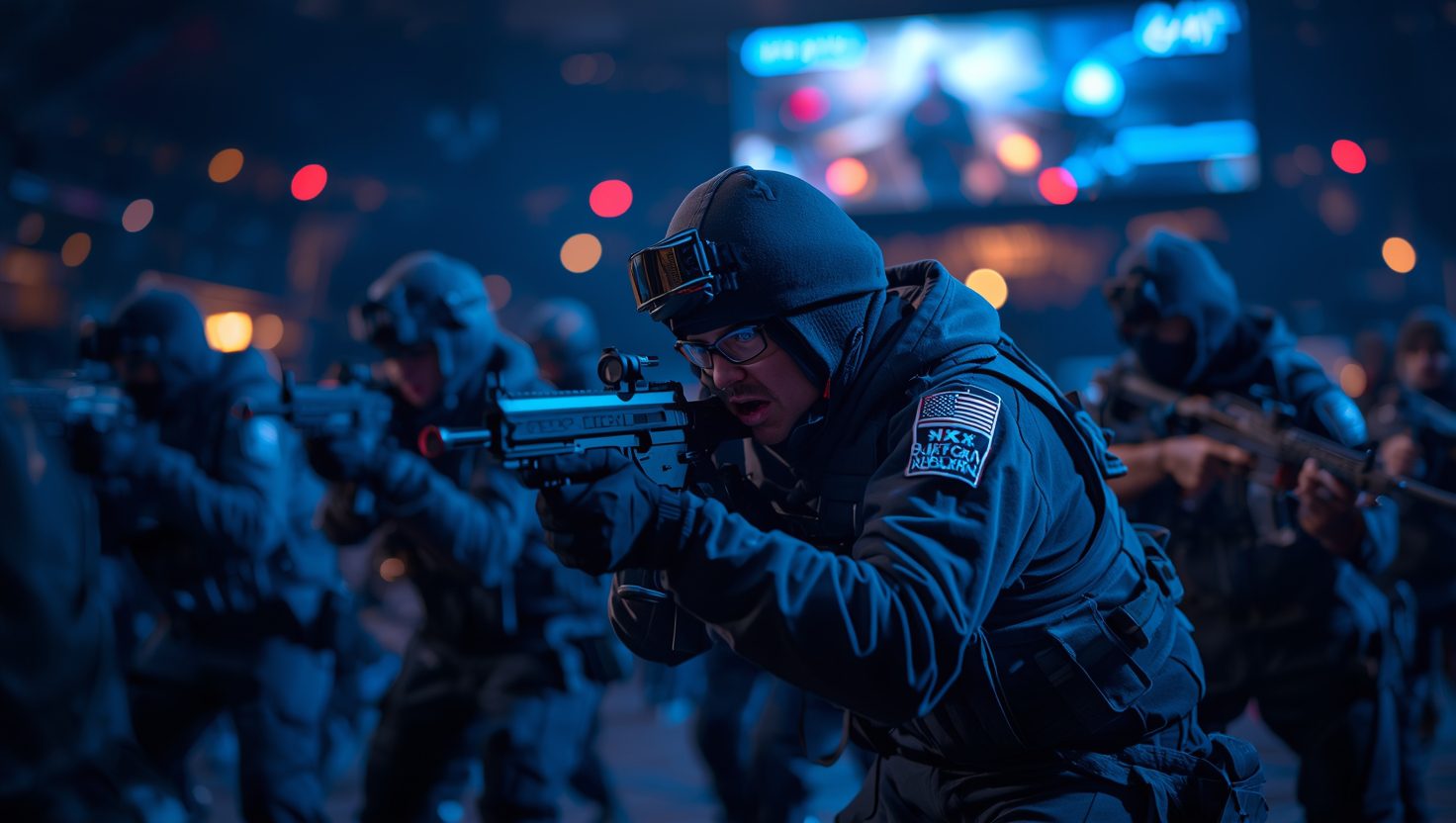
Counter-Strike players spend an enormous amount of time reading movement. Every shoulder peek, crouch adjustment, landing animation, and stop-start strafe becomes part of the information battle that decides rounds. That is why Valve’s April 1, 2026 animgraph_2_beta branch matters far beyond visuals: the official notes describe a deeper systems update that reduces animation-related CPU and networking costs while rebuilding how third-person motion is authored and presented in CS2.
For a community that cares about competitive clarity, spectator quality, and even demo review, this beta looks like more than a cosmetic refresh. It follows Valve’s earlier July 28, 2025 migration of all first-person animations to AnimGraph2, making the current test branch feel like the next major step in a long-running overhaul. If the rollout lands well, Animgraph 2 beta could reshape how players, casters, analysts, and stream viewers read language in Counter-Strike 2.
Valve is treating animation as competitive infrastructure
The clearest signal from Valve is in the wording of the beta itself. The company did not present animgraph_2_beta as a small visual touch-up. Instead, Valve said the branch updates CS2 to Animgraph 2, reduces CPU and networking costs associated with animation, re-authors all third-person animations, smooths in-air crouch transitions, and refactors player height logic on sloped surfaces.
That matters because these are the systems players rely on to interpret intent. In Counter-Strike, movement is not just movement; it is communication. Opponents try to disguise timing, stop their momentum cleanly, or sell one path before taking another. If the game’s animation stack becomes more consistent and less expensive to process and transmit, there is a reasonable case that what players see on screen may become more faithful to the state the server is trying to represent.
For the CS community, this is the strongest official evidence yet that Animgraph 2 is part of competitive tech infrastructure. Valve is explicitly tying the branch to performance vectors like CPU and bandwidth, not only to polish. That framing supports the idea that this update could affect the readability of fast peeks, counter-strafes, crouch changes, and elevation shifts in ways that reach beyond aesthetics.
A long-running overhaul, not a one-off experiment
One important piece of context is that Valve has been moving toward this moment for months. On July 28, 2025, the studio said it had migrated all first-person animations to AnimGraph2, including weapon deploy, firing, reload, and inspect animations. At the time, Valve also stated that the animation system was in the process of being upgraded to AnimGraph2.
That timeline matters because it shows the April 2026 beta is not a random branch that appeared out of nowhere. It is a continuation of a broader animation-stack transition already underway inside CS2. First-person actions were handled earlier; now the spotlight is on third-person readability, state transitions, and how player models communicate movement to opponents and observers.
For players and content creators, this longer arc also makes the beta easier to take seriously. The update looks less like a temporary test and more like the next public phase of a foundational rebuild. When a system has already touched weapon handling and now expands into world-view motion, it becomes easier to see why movement legibility is suddenly at the center of discussion.
Why third-person rework could change how movement is read
The most important gameplay-facing line in the beta notes may be the one about re-authoring all third-person animations. Third-person presentation is what enemies, teammates, observers, and broadcast cameras read. If Valve has rebuilt that layer from scratch, then the clarity of stance changes, directional shifts, and deceleration cues could improve in ways that matter every round.
That is where the phrase “Valve is rebuilding movement legibility from the model outward” fits well. Smoother in-air crouch transitions and rewritten third-person logic suggest an effort to make state changes easier to follow visually. A player landing, crouching, changing direction, or stabilizing after movement should ideally look like they are doing exactly that, rather than creating mixed signals through awkward interpolation or unclear posture updates.
For competitive players, better third-person language could mean cleaner reads during shoulder peeks, tighter understanding of when an opponent has actually committed to a stop, and fewer moments where the model appears to tell a different story from the shot timing. For broadcasters, the same change could make replays, free-cam shots, and observer segments easier to parse at full speed.
Slopes, height logic, and the case for more honest language
One of the most interesting official changes is the refactor of player height adjustment on sloped surfaces. That might sound niche at first, but Counter-Strike players know how much angle perception depends on exact presentation. If a model’s effective height or stance appears inconsistent on uneven ground, it can distort what players think they are seeing during peeks and holds.
This is why a strong editorial angle around the beta is that it may make Counter-Strike language more honest. When slope logic is messy, the visual story can become unreliable. A shoulder might show at a strange timing, a crouch may read awkwardly, or a player may appear to occupy vertical space in a way that confuses both the person taking the duel and the viewer watching the exchange.
By specifically targeting slope-height behavior, Valve is addressing one of the less glamorous but more meaningful layers of movement readability. In practical terms, that can influence how accurately players interpret exposure, how cleanly observers explain a peek, and how fair a duel feels when model posture aligns more closely with gameplay state.
Why CPU and network reductions matter for spectators too
Valve’s notes highlight two performance vectors at once: lower CPU cost and lower networking cost associated with animation. There are no public percentage figures attached, but even without exact numbers, that combination is notable. Animation updates are usually discussed as visual improvements. Here, Valve is framing animation as something that also affects simulation over and data transmission.
That has clear implications for how movement may be perceived. If animation data becomes cheaper and cleaner to process and ship, there is a stronger chance that the visual output players and observers receive will be more consistent in stressful moments. Counter-Strike is full of those moments: counter-strafes around tight angles, jump-land transitions, crouch-peek adjustments, and rapid direction changes in post-plant scrambles.
For broadcasts, this could be especially valuable. Cleaner third-person cues paired with reduced bandwidth pressure may help observer tools and spectator perspectives track intent rather than just raw position. That does not mean every confusion point disappears, but it does support the idea that Animgraph 2 beta could improve how a replay or live cam communicates what a player was actually trying to do.
Community testing is already zeroing in on movement clarity
Early community reaction has centered on exactly the issue many players care about most: movement clarity. Across recent discussions, testers have described direction changes and aim presentation as easier to read. One widely shared observation from player feedback is that the update “made the direction of aim much clearer to read.” While that is anecdotal rather than an official Valve claim, it lines up with the beta’s stated focus on re-authored animation behavior.
Another recurring theme is counter-strafing. Some community posts have specifically claimed the beta “added the counter strafe animation,” which should be treated as player interpretation, not patch-note wording. Even so, the fact that players immediately framed the branch this way is revealing. It suggests that the visible difference they feel first is not prettier movement, but more understandable movement.
One more quote from testing captures the same idea well: the beta “telegraphs WAY better what the gun does and what your model does.” That is an important framing for CS2. Telegraphing is not fluff in Counter-Strike. It is part of the information economy of every duel, every observer clip, and every analyst segment breaking down why a fight was won or lost.
Broadcasts, replays, and analysis could benefit as much as players
The readability case is not limited to gameplay on the server. Third-party reporting in early April 2026 has already pointed to a media-facing angle: rebuilt animations may support fairer gameplay and improved broadcasts. That interpretation makes sense when you combine Valve’s official notes with how much CS coverage depends on third-person understanding.
Broadcasters and observers need models to communicate intention quickly. A slight direction change before a swing, a cleaner crouch transition, or a more faithful stop can make the difference between a replay that looks messy and one that clearly explains a player’s decision. If Animgraph 2 helps character models express those moments more reliably, then the viewing experience improves for everyone from casual stream viewers to desk analysts reviewing key rounds.
This is why the phrase “Animgraph 2 beta could help broadcasts track intent, not just position” feels so relevant. Position alone does not tell the full story in Counter-Strike. The game is also about timing, commitment, and deception. Better third-person animation readability can give production teams more useful visual cues to work with, especially in high-speed rounds where the smallest -language detail matters.
Active beta status means the story is still evolving
It is also worth stressing that this remains an active beta, not a finished rollout. Valve has told players to opt into the animgraph_2_beta branch and send feedback by email using the subject line “AG2 Beta.” That kind of direct bug-report workflow is a clear sign the company still wants real-world testing and is open to gameplay-impacting revisions before any broader release.
The public build trail supports that view. SteamDB logged an “Animgraph 2 Beta Update” on April 9, 2026 with build 22720547, only about a week after the original April 1 beta notes. That follow-up included a further reduction in network bandwidth utilization, which suggests Valve is iterating quickly rather than leaving the branch untouched.
There is also an operational reminder here for tournament organizers, community server admins, and testing groups: the April 9 update included a warning that mismatched builds can trigger fatal connection errors. In other words, this branch is promising, but still unstable enough that server-client parity matters. Anyone experimenting with it should treat it as live testing infrastructure, not a locked competitive standard.
Put together, the most practical summary is simple: this looks like a readability patch disguised as an animation patch. The official facts are strong on their own: July 28, 2025 for the first-person AnimGraph2 migration, the April 1, 2026 release of animgraph_2_beta, a public timeline marker on April 2, 2026, 20:21:35 UTC, and a rapid follow-up build on April 9, 2026. Add in the stated CPU and networking reductions, re-authored third-person animations, smoother in-air crouch behavior, and slope-height refactoring, and the case becomes hard to ignore.
For the Counter-Strike community, the real test will be whether these changes make duels feel more readable and broadcasts more trustworthy over time. Early player feedback suggests movement cues, aim direction, and counter-strafe readability may already be improving. If that holds up, Animgraph 2 beta will not just be remembered as another backend update. It could be the moment Valve started rebuilding CS2 movement legibility in a way that benefits players, observers, analysts, and the wider scene all at once.